Middletown, NJ · Garage Door Service
Opener installs in Middletown's older housing stock, where cold winters and aging gear-driven units cause more failures than newer construction sees.
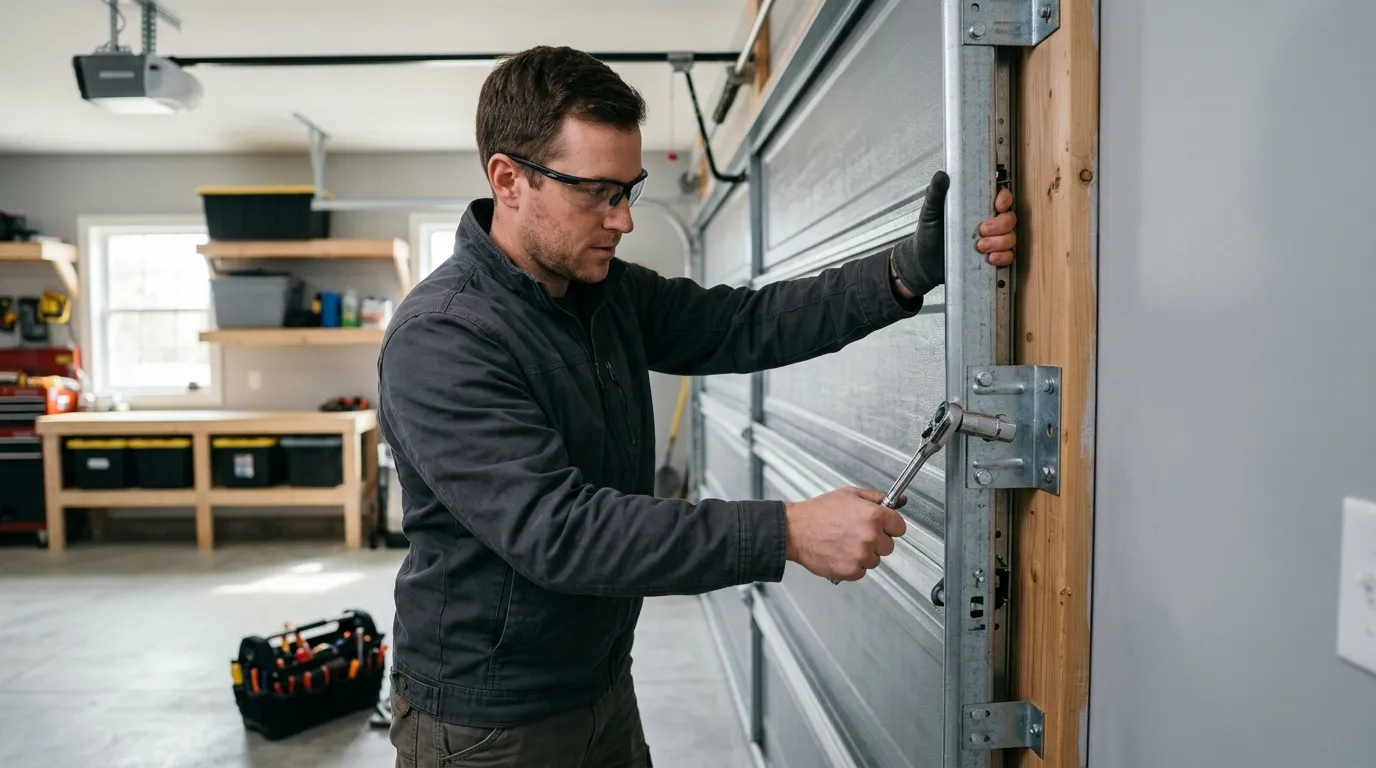
A lot of the openers we replace in this area are original to houses built between 1938 and 2005, with the median going up around 1962. That matters because most of the stock in the area dates from the 1960s and 70s, and those garages were wired for the openers of that era, not what's sold today. Chain-drive units from that period run on steel gears that were never meant to last sixty years, and a lot of them are still turning, badly.
Winters here fall into the severe end of the cold band, and cold makes chain-drive gears crack and belt-drive rubber stiffen faster than a mild climate would. A motor that struggles to start on a 20-degree morning is putting extra load on gears that are already worn thin from decades of use. Add a garage that isn't insulated - common in houses this age - and the opener is working against the weather every single cycle, all winter.
This isn't a Middletown-specific defect. It's what happens when housing stock this old meets a climate this cold, over and over, for enough winters. The opener eventually loses that fight, and it usually picks the coldest week to do it.
Some of it, yes. You can check that the photo-eye sensors near the floor are aligned and not blinking, and you can make sure nothing is blocking their line of sight. That solves a surprising number of "opener won't close" calls on its own.
What you shouldn't do yourself is the actual install. A new opener needs the travel limits set correctly, the force settings calibrated so the door doesn't crush anything on the way down, and the safety reversal system tested and confirmed working before anyone walks away. Get any of that wrong and you've got a door that either won't stop when it should or won't open when someone's in the way. There's also usually a dedicated circuit involved, which is electrical work, not garage work.
Our honest limitation here: if your existing opener is a gear-driven unit from the 60s or 70s and the wiring hasn't been touched since, we're not going to just swap the head unit and call it done. That wiring often needs updating to meet current code, and skipping that step to save time isn't a shortcut we'll take.
The opener tries to lift the door and stalls partway, then reverses on its own. That's usually a gear-driven unit losing torque against a spring that's no longer doing its share of the lift work - common in houses from this build era where the spring and opener have never been serviced as a pair.
The remote works from ten feet away but not from the driveway. That's a range problem, often tied to an older receiver board that was never designed to compete with modern wireless interference.
Lights blink in a pattern and the door won't move at all. Newer openers use blink codes to tell you exactly what failed - obstruction sensor, limit switch, capacitor. Units from the era common to this area's housing stock don't have that diagnostic layer, so the failure is silent until the whole thing stops.
Across the 142,391 owner-occupied houses in this service area, the failure pattern repeats: gear-driven units installed decades ago, never rewired for today's safety standards, running until they simply can't anymore.
Median household income across the service area runs $113,229, which is why we see full opener replacements more often than patch repairs out here - homeowners choose to replace an aging gear-driven unit rather than nurse it through another cold season. If your opener is struggling to lift, losing range, or making noise it didn't used to make, that's the point to call before it fails on a morning you actually need the door open.
We'll look at the opener itself, the spring it's paired with, and the wiring behind it before we quote anything. If the fix is smaller than a full replacement, we'll say so. Visit our home page for the rest of what we do.
If it's a chain-drive unit from the 60s or 70s era common to houses in this area, and the circuit board or gears are the problem, replacement usually wins - parts for units that old are hard to source and the labor to hunt them down often costs more than a new unit.
Usually, but we check the spring first. An opener paired with a spring that's already losing tension will stall and wear out early. If the spring needs attention too, we'll tell you before we quote the opener job, not after.
Both. Cold stiffens the chain, thickens old lubricant, and makes the motor work harder to start each cycle. In a climate that sits in the severe cold band, that extra load adds up fast on units already worn from decades of use.
We can, but that's electrical work beyond a straight opener swap, and we'll walk you through what that adds to the job before we start. Skipping it isn't something we'll do just to finish faster.
By Neighborhood
We also handle opener installation in these Middletown-area suburbs.
Call now or request a free quote - same-day service on most repairs, upfront written pricing.