Middletown, NJ · Garage Door Service
Red Bank homes date mostly to 1955, older than the surrounding area's stock, meaning original hardware and narrower single-car openings that need matched parts, not guesses.
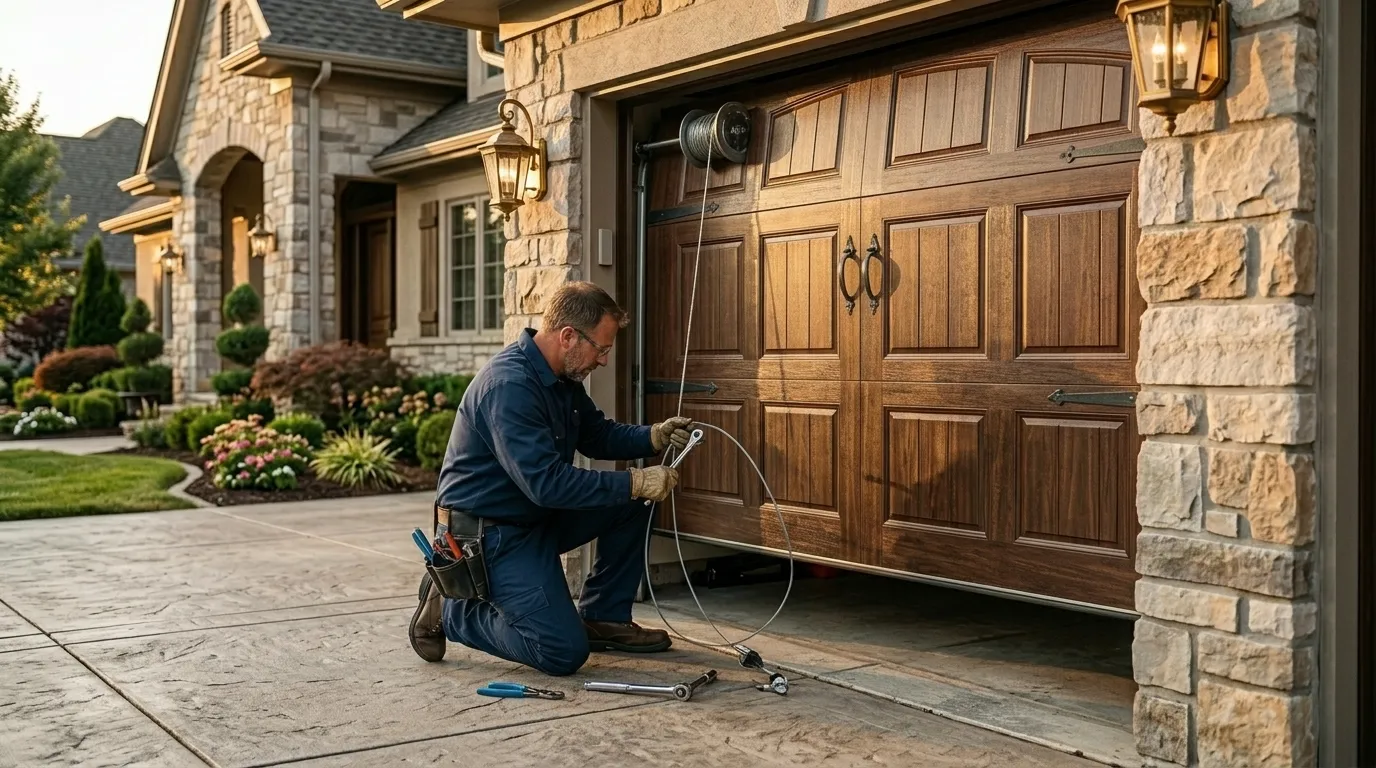
Walk a block in Red Bank and you're mostly looking at houses built around 1955, a decade or more older than the newer construction filling out other parts of this service area. That matters for the door itself before it ever matters for the fault. A house from the mid-1950s was very often built with a single-car bay, sometimes 8 feet wide instead of the 16-foot double you see everywhere in later subdivisions, and the door hung in it is either a heavy original wood-panel slab or a steel replacement someone dropped into an opening never designed for modern spring hardware.
That mismatch is where jobs go wrong. A torsion spring sized for a standard double door gets installed on a narrower single opening because nobody measured twice, and the door either won't lift evenly or slams down on one side. On a street of houses this age, we're not troubleshooting a generic garage door - we're troubleshooting a door that's been patched, replaced, or retrofitted at least once already, and figuring out what's actually behind the current panel before ordering anything.
We come out to Red Bank from Middletown, about 4 miles up the road, so there's no local branch to call - just the one truck routed out to you. When you book, tell us the rough age of the house if you know it and whether the door is a single or double bay; on 1955-era homes that single detail changes which spring and track hardware we bring, and it saves a second trip.
We don't hold a standing crew in Red Bank itself, so we're not going to promise a same-hour window here the way a business physically based in town might. What we can do is confirm parts before we drive over, which on houses this old is worth more than a fast arrival with the wrong spring in the truck.
The trouble spot on 1955-built houses is almost always the transition point: original wood jamb, original track brackets, but a newer opener or a newer door bolted onto hardware that was never designed to carry it. We see openers mounted to framing that's shifted with 70 years of settling, which throws the whole alignment off in ways that look like a sensor problem but aren't.
Cold matters here too. This area sits in a severe cold climate band, and on older single-bay doors with thinner original framing, winter cold snaps are when marginal hardware finally lets go - a spring that was already fatigued, a cable that was already fraying. It's not that the cold breaks the door outright; it's that cold exposes what summer was already hiding.
For a house built in the mid-1950s, the door you've got is more likely to be a narrower single-bay opening or an older double retrofit than the wide modern double you'll find on newer streets nearby. We carry torsion springs and cable sized for both, along with the track hardware that fits an older, narrower jamb rather than assuming everything is a standard 16-footer.
One honest limit: if your door is an original wood panel slab rather than a steel replacement, matching panels isn't something we stock - those are custom or salvage, and we'll tell you straight if repair on that specific panel isn't practical versus replacing the whole door with something built for the opening you actually have.
On a house this age, the door struggling to lift evenly, or dropping hard on one side, usually points to a spring that's either the wrong size for a retrofit door or has just worn out after decades of cycles. If the opener runs but the door barely moves, that's the spring, not the motor.
Grinding or a door that binds partway up often means the track was shimmed or reset at some point to fit a replacement door into an old single-bay frame, and it's slightly out of true. Rattling on the way down, especially in cold weather, is loose or fatigued hardware finally showing itself - the kind of wear that a severe cold winter here tends to surface first.
Swapping a broken roller or tightening loose bolts on a door this age is reasonable to do yourself, if the door is a modern steel replacement and you're comfortable on a ladder. What's not worth doing yourself is anything involving the torsion spring - on an older single-bay opening especially, the spring tension and cable routing were often adjusted by whoever installed the retrofit door, and it's not always standard.
If you're not sure whether your door is original to the 1955 build or a later replacement, that's worth a call before you touch anything, since the hardware behind the panel changes the whole job.
Most houses in Red Bank went up around 1955, often with narrower single-bay openings than the wide doubles common in newer construction nearby. That changes the spring size, cable length, and track width needed, so a part that fits a modern double door often won't fit correctly on an older single-bay opening.
No. We work out of Middletown, about 4 miles away, and drive out to Red Bank for each job. There's no standing crew stationed in town, so we confirm the door type and likely parts on the phone before we come out.
Not always. If your door is an original wood-panel slab rather than a steel replacement, matching individual panels usually isn't something we stock, since those are custom or salvage pieces. In many cases replacing the full door built for your actual opening is more practical than chasing a matching panel.
This area sits in a severe cold climate band, and on older homes with original or retrofitted hardware, winter cold is often when a spring or cable that was already worn finally fails. The cold doesn't create the weakness, it just tends to be when it shows up.
Call now or request a free quote - same-day service on most repairs, upfront written pricing.