Middletown, NJ · Garage Door Service
Red Bank's median income sits below the service area average, and its housing runs older too - both change when a spring or opener service is worth doing here.
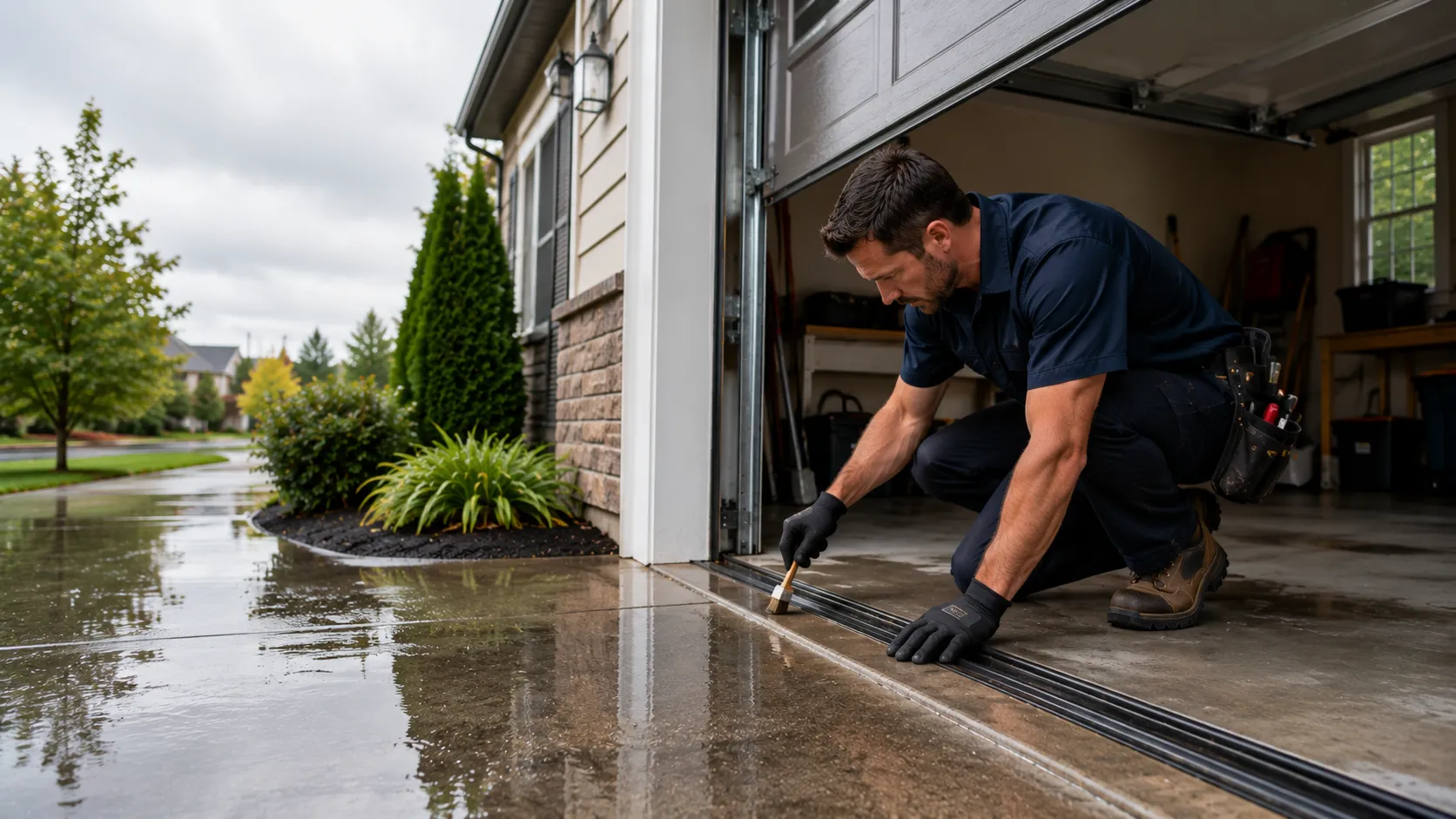
Start with the number that actually decides most jobs: median household income in Red Bank runs $101,738, about eleven thousand dollars under the $113,229 median across the wider service area. That gap matters because it sets where the repair-or-replace line falls. A homeowner here is more often looking at "can this be fixed for a few hundred dollars" rather than "just replace the whole unit," and the housing stock backs that up. Red Bank's median build year is 1955, seven years older than the 1962 median for the broader area, which itself spans houses built anywhere from 1938 to 2005. Older build year means more original torsion hardware still hanging on the header, more single-plate spring anchors, and more openers that have already outlived one or two motors. Maintenance here isn't a luxury add-on sold alongside a new door - for a lot of these houses it's the thing that keeps a 1955-era track and drum running another few winters instead of forcing a full replacement the homeowner didn't budget for. That's the angle that matters for this town specifically, not a generic service pitch.
Middletown Garage Door Pros works out of Middletown and drives the four miles into Red Bank for maintenance calls. There's no branch office or drop-in counter in town - the truck comes from Middletown, so a visit gets scheduled rather than walked in. That short distance keeps the trip practical for routine maintenance work, which is the kind of job that doesn't wait for an emergency to justify the drive: lubricating hardware, checking spring tension, tightening loose bolts on tracks that have been shifting slightly for years without anyone noticing. If you're on a street with houses from the 1950s wave of construction, mention that when you call - it tells the tech what kind of spring cone and drum size to bring rather than guessing at the door. Book through the Red Bank service page linked below, and be ready to say roughly how old the door and opener are; on a lot of these houses, nobody's touched the springs since they were installed.
The trouble in Red Bank usually isn't the maintenance call itself - it's what the tech finds once the door is open. On a house built around 1955, a spring or cable job can turn up a torsion tube or drum size that stopped being standard decades ago. That's a different problem than a routine lube-and-adjust, and it's worth knowing before the truck shows up, not after. A second failure point: owners who've had one panel replaced over the years, often mismatched to the original 1955-era door width or gauge, so the balance is off in a way that a basic tune-up won't fully correct. The fix in that case is usually a hardware swap, not just adjustment. None of this is about scaring anyone into a bigger job - it's that a house at Red Bank's median build year carries a different risk profile than a house built in the 1990s, and pretending otherwise just means a callback in six months.
Here's the honest limitation: not every spring size that fits a 1955-built door in Red Bank sits on the truck as a matter of course. Standard torsion springs, rollers, and common cable sizes are stocked and go on the same visit. But older-gauge torsion springs sized for houses from that mid-century wave sometimes need to be ordered, which means a second trip. That's not a stall tactic - it's the reality of a house that's older than most of the doors made today. If your door is original to a 1955-era build and hasn't been touched, expect the tech to confirm the spring wire diameter and drum size on the first visit and, if it's a less common size, schedule the install for when the part's in hand. For openers, standard chain and belt-drive parts are stocked; older screw-drive units from an earlier opener generation are the ones most likely to need a lead time.
New Jersey's cold season is classed as severe in this region, and that shows up hardest on doors that are already decades old. A track that's been fine all summer can throw a roller in January once steel contracts enough to change the clearance by a fraction of an inch - more likely on a 1955-era track than a newer one with tighter tolerances. Watch for a door that shudders or hesitates a few inches off the ground; that's usually a spring losing tension, not the opener failing. A grinding sound on the way up, rather than the way down, points to a roller or bearing rather than the motor. If the door reverses right after you hit the button, with no visible obstruction, that's often a sensor knocked out of alignment - common after a winter of frost and thaw shifting the slab slightly. None of these are urgent the first time they happen. They get expensive when they're ignored through a second winter.
Some of this is fine to handle on your own. Wiping down and lubricating rollers and hinges, checking that the photo-eye sensors are aligned and clean, and tightening visibly loose bolts on the track brackets are all reasonable homeowner jobs, and doing them twice a year keeps a lot of small issues from becoming service calls. What you should not do yourself: touch the torsion spring, the cable, or anything under tension. On a door with 1955-era single-spring hardware, that tension is higher and the failure mode is worse than on a newer double-spring setup - a spring that lets go under load has put people in the hospital. If the door is noticeably harder to lift by hand than it used to be, that's a spring losing tension, and it's a call, not a weekend project.
Red Bank's median build year is 1955, older than the 1962 median across the wider service area. Older doors carry original torsion hardware and openers that have already been through more temperature cycles, so springs, cables, and rollers wear faster and need checking more often than on a house built in the 1990s or later.
No. Middletown Garage Door Pros works out of Middletown and drives the four miles into Red Bank for scheduled visits. There's no depot or drop-in location in town, so maintenance calls get booked ahead rather than walked in.
Standard spring, roller, and cable sizes are stocked and handled the same visit. Older-gauge torsion springs sized for mid-century construction sometimes need to be ordered, which can mean a second trip. The tech will confirm the size on the first visit.
At Red Bank's median income of $101,738, most homeowners land on repair first - a spring and cable service usually costs far less than full replacement. Replacement makes more sense when the panels themselves are damaged or the opener has failed more than once.
Call now or request a free quote - same-day service on most repairs, upfront written pricing.