Middletown, NJ · Garage Door Service
Red Bank homes date mostly to 1955, older than the surrounding area's 1962 median. That gap changes what hardware and clearance a new door install needs here.
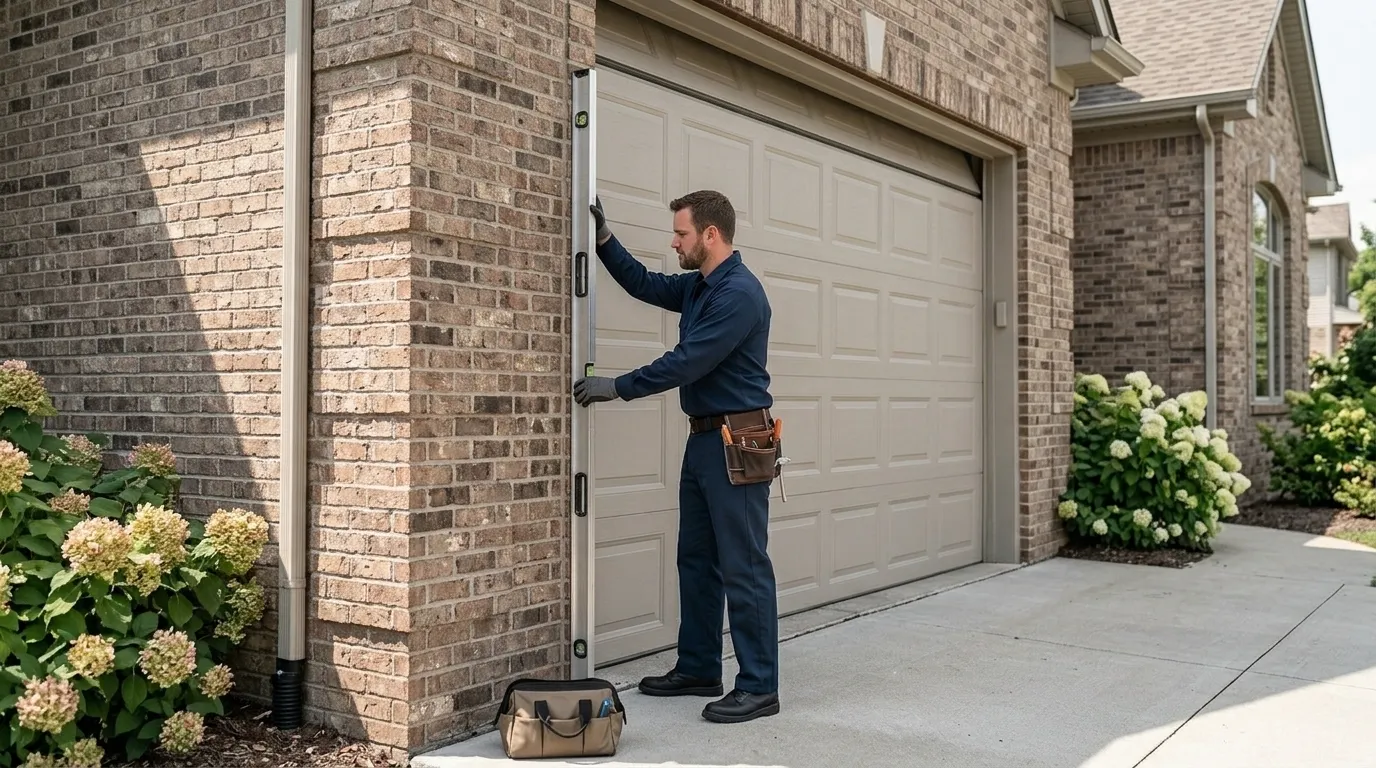
Red Bank's housing stock centers on 1955, several years ahead of the 1962 median across the wider Middletown service area. That difference matters more than it sounds. A door built in the mid-1950s was framed for a lighter single-layer panel and a torsion or extension spring sized for that weight, not for the heavier insulated steel doors sold today. When a homeowner here orders a standard new install off a truck without checking the opening first, the header and jamb studs on a 1955-era garage frequently need shimming or reinforcement that a 1970s frame wouldn't. We've hit this on more than a few Red Bank jobs: the rough opening is close, but not close enough for the track hardware that ships standard with most current door lines. This isn't a defect in the house. It's just a mismatch between what was normal to build in 1955 and what a door manufacturer assumes is normal today. Catching it before the door arrives, not after, is the difference between a clean install and a return trip.
We travel to Red Bank from Middletown, about 4 miles up the road, so booking a visit means scheduling a truck out of Middletown rather than a local branch. When you call, tell us the age of the house if you know it and whether the garage is original to the build. That one detail lets us bring the right jamb brackets and spring sizing on the first trip instead of guessing. We don't keep a Red Bank-based crew, so same-day visits depend on the day's route, not a promised window - we won't tell you otherwise. What we can do is size the job accurately over the phone using the housing era, which for most of Red Bank means treating the opening as older than what our stock trucks are set up for by default.
The failure point on a Red Bank install almost always shows up at the header, not the door itself. A 1955-built opening was framed for a single-panel wood or light steel door on a lighter track. Drop in a modern double-layer insulated door without checking the header's load rating, and you get a door that closes hard, binds on one side, or pulls the top bracket loose within a season. New Jersey's cold-and-severe climate band makes this worse over a winter: wood framing that's flexed even slightly from an oversized door will telegraph that movement as ice forms and thaws in the gap. We've had to go back into openings where a heavier door was installed without reinforcing the jamb first, and that's a harder, more expensive fix than doing the header work up front. If your house is close to that 1955 median, budget for a header check as part of the quote, not an add-on after something goes wrong.
Because so much of Red Bank sits in that mid-1950s build window, we carry torsion spring sizes and jamb bracket hardware sized for older single-panel openings on the truck, alongside the standard stock for newer double-layer doors. That's a direct response to what we keep finding on this side of the service area - a house that looks like a normal ranch or colonial from the street but has an opening framed a decade or more before the door hardware most manufacturers assume as standard. We don't stock every legacy part; some older extension-spring assemblies on pre-1955 openings are special order and add lead time. If your house predates 1955 by much, ask about that up front so it doesn't surprise you mid-job.
If your door drags on one side, closes with a shudder near the bottom, or the opener strains audibly on the last foot of travel, that's usually the header-to-door mismatch showing up, not a failing opener. On a house from Red Bank's 1955 era, we'd check the jamb and header load before touching the opener settings. A door that visibly bows in the middle under a modern insulated panel, especially after a cold snap, points to the same root cause - the frame wasn't built for that weight class, and New Jersey's cold-and-severe winters accelerate the wear. None of this is unusual for the area; it's just what an older opening does under newer hardware, and it's fixable with the right bracket and header work rather than a full frame rebuild in most cases.
Swapping a garage door panel is not a weekend DIY job on a house from this era, and we'll say that plainly. The spring tension on a torsion setup sized for a 1955-era single panel is dangerous to adjust without the right bars and clamps, and getting the header reinforcement wrong means the door looks fine for a month and then fails at the bracket. If you're comfortable with basic carpentry, checking your header for rot or undersizing before calling anyone is worth doing yourself - it's the one thing that changes our quote the most. Beyond that, this is a two-person job with the door under spring load, and it's not worth the trip to the ER to save a service call.
Houses here mostly date to 1955, a decade or more before modern insulated steel doors became the default weight class. In New Jersey's cold-and-severe climate, a header framed for a lighter original door flexes slightly as it freezes and thaws, which shows up as binding or a door that drags on one side under a heavier replacement panel.
No. We run out of Middletown, about 4 miles away, and travel in for installs and repairs. There's no local depot here, so scheduling depends on the day's route rather than a guaranteed same-day window.
Often yes, but the header and jamb sometimes need reinforcing first since Red Bank's housing stock centers on 1955, ahead of the newer builds elsewhere in the service area. We check the opening's load rating before quoting a door so you're not paying for a return trip to fix a bracket that pulled loose.
It can be, given the area's cold-and-severe winters, but only if the opening is reinforced to carry it. Putting a double-layer door on a frame built for a lighter 1955-era single panel without that check is the most common mistake we see on this side of the service area.
Call now or request a free quote - same-day service on most repairs, upfront written pricing.