Middletown, NJ · Garage Door Service
Strathmore homes run a few years newer than the rest of the Middletown service area, and it changes what's wearing out on the track. Here's the roller job, priced and explained.
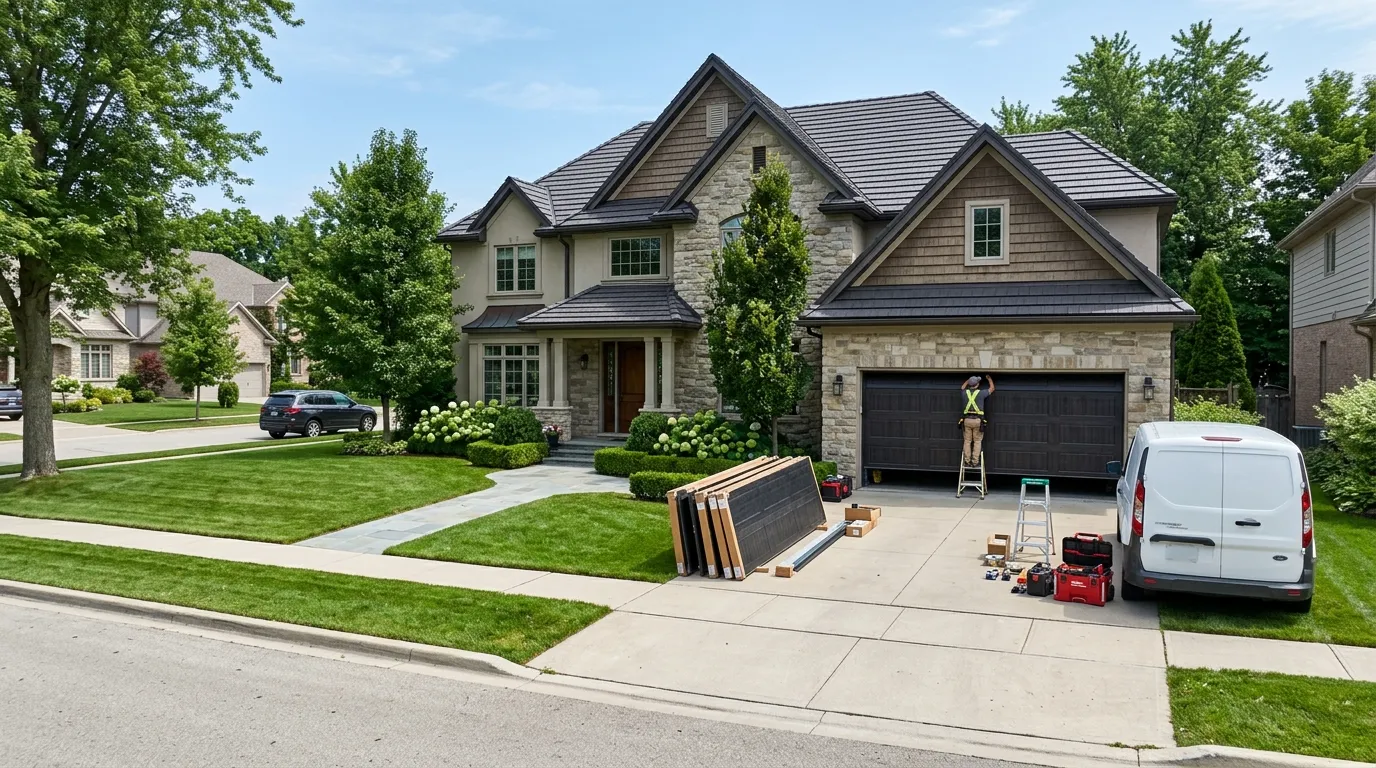
A straight roller swap on a double door usually runs under two hours once the truck is on site, and that's with both tracks off and cleaned, not just the worst rollers pulled. Strathmore sits six miles from our Middletown shop, so figure that drive into when we can get there - we don't keep a branch or a standing crew in this end of the county, we come from Middletown for every call.
The job itself doesn't change much door to door: unbolt the roller brackets, walk the old rollers out of the track one at a time so the door doesn't drop on you, set new ones, check that the track hasn't bent from years of a worn roller riding sideways in it. Where it changes is what we find waiting for us. Strathmore's housing runs a median build year of 1966, a few years past the wider service area's 1962 median, which usually means the original steel rollers here were already one generation past the earliest stamped-steel setups - a small thing, but it changes which bracket bolt pattern shows up under the cover.
The roller job goes wrong when the track gets treated like it's fine. A roller that's worn oval doesn't just rattle - it lets the door wander sideways in the track a little more with every cycle, and on a house built around 1966 that track is original-length steel that's had six decades of seasonal swelling and cold contraction to work its screws loose. Tighten a bent track around a new roller and you've bought yourself a callback in a few months, not a fix.
The other place it goes sideways is lubricant. This is a cold-climate service area, and the wrong grease on a nylon roller stem in a severe winter stiffens up and starts chewing the nylon from the inside. We see this most on doors that got a big-box roller kit installed with whatever grease was in the garage. It looks fine in October and grinds by January.
We don't publish a flat number for this because the spread between a basic 7-roller nylon set and a sealed-bearing upgrade on a double door is real money, and Strathmore's household income sits well above the service area's overall median - $155,048 against $113,229 across the wider area - which means we get asked for the sealed-bearing option here more often than elsewhere. That's a fair upgrade if you want quieter and longer between services; it's not required to fix the problem.
What we won't do is quote a price sight unseen. If the track is bent or a cable's frayed from riding against a bad roller, that's a different job stacked on top, and we'd rather tell you that on site than surprise you on the invoice.
Rollers are one of the more doable garage door jobs for a homeowner who's careful, and plenty of people in this area do it themselves on a single door with the door manually supported and the opener disconnected. The part that trips people up isn't the roller - it's the bottom bracket on a torsion-spring door, which is under tension and not something to open with a wrench you found in the drawer.
If your door is a double, or the bottom two rollers on either side look worn, hand that pair to someone who does this daily. Everything above that, the middle rollers on a light single door, is reasonable weekend work if you take your time and don't force a bent track back into shape with the new part.
Strathmore's roller failures track the neighborhood's build era pretty closely. A median 1966 build year means most of the original hardware, if it's still on the door, is stamped steel rollers on steel stems - no bearing, no nylon, just metal riding metal in a track that's had close to sixty winters of contraction. That combination wears loud and wears unevenly, and in a severe-cold service area like this one, the stems tend to bind up hard on the first real freeze before anyone notices the rattle that came before it.
Houses built here later than the service area's overall 1962 median sometimes got a slightly different bracket pattern from the builder, which is a small detail until you're standing there with the wrong bracket in your hand. It's why we bring stock for a few generations of hardware rather than assume one kit fits every door on this side of the six-mile stretch out from Middletown.
We pull the old rollers one side at a time, never both tracks open at once, and check each track for the kind of slow bend that a worn roller causes over years, not months. If the track's straight, new rollers go in, we run the door through a full cycle by hand before the opener touches it, and we grease for the cold - this is a severe-winter area and the wrong lubricant here causes more callbacks than the roller itself ever does.
If a track is bent, we say so before we close anything up. A bent track with new rollers pressed into it is a repair that looks finished and isn't, and we'd rather have that conversation on your driveway than have you calling us back in February.
For the full service list this comes out of, see our Strathmore garage door service page; the base version of this same job, priced for the Middletown side of the area, is on the roller replacement page for Middletown.
About six miles. We don't keep a crew or depot in Strathmore itself - every job here is a drive out from Middletown, which we factor into scheduling rather than promising a fixed response window we can't back up.
Often, yes. Strathmore's housing runs a median build year of 1966, a bit later than the wider area's 1962 median, so the original stamped-steel roller and bracket hardware here can be a slightly later generation than what we find on older streets nearby.
Basic nylon rollers do the job on most doors and are the more common repair. Sealed-bearing rollers run quieter and last longer between services, which is why we get more requests for the upgrade in higher-income areas like this one, but it's a preference, not a requirement.
Call now or request a free quote - same-day service on most repairs, upfront written pricing.