Middletown, NJ · Garage Door Service
Serving Belford's 1970s-era homes 3 miles from Middletown. We know the extension-spring doors and steel jamb tracks this area's houses came with.
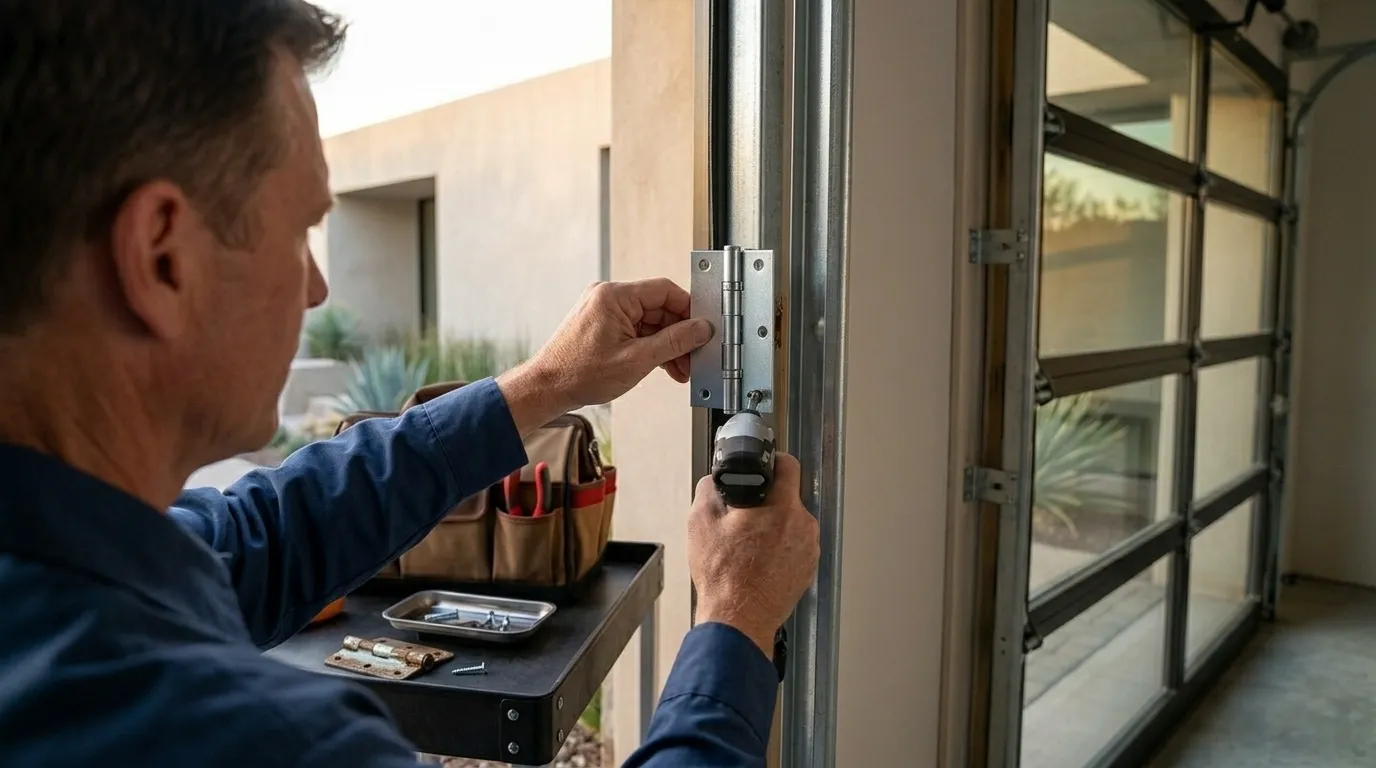
Belford sits about 3 miles from our Middletown base, and the houses here run newer than a lot of what we see across the wider service area. Where the region as a whole spans 1938 to 2005 with a median build year around 1962, Belford's housing clusters closer to 1978. That ten-to-fifteen year gap matters more than people expect.
A garage built in 1978 almost never has the old side-mounted torsion hardware you find on the pre-war and 1950s stock elsewhere. Instead you're more likely looking at an extension spring setup over the door, or an early torsion bar mounted the way manufacturers standardized through the late 70s. The tracks are usually steel, not the heavier gauge stuff from earlier decades, and the panel sections are lighter too - more prone to denting from a car bumper tap, less prone to the total sag you get on a door that's pushing 70 years old.
We also see fewer doors here that have been "fixed" three times by three different people over five decades, simply because the houses haven't been standing long enough to accumulate that history. What we do see is original hardware from the late 70s and early 80s finally hitting the end of its service life at the same time across a lot of driveways at once.
The extension spring is the part that fails most in a neighborhood built out around 1978. Unlike torsion springs, which sit on a shaft above the door, extension springs stretch along the horizontal tracks and lose tension gradually - so the door starts feeling heavier on the way up months before it actually breaks. That's the call we usually get: "it's been getting harder to lift" followed a few weeks later by "it won't move at all."
Opener units from that era, if they're still original, are long past any useful lifespan and the logic boards inside aren't stocked new anymore - replacement is the only real option once one fails. Rollers on 1970s steel track also wear a specific way, grooving the track edge over time, which throws the door off-square and makes it bind on one side before the other.
Cold-climate stress adds to all of this. In a severe cold band, steel contracts, lubricant thickens, and any spring or hinge that was already marginal tends to give out on the first hard freeze rather than fading in slowly. That's when we get the stacked calls.
Belford is a smaller pocket within the service area - about 683 households - and it reads differently than the region's broader mix of 76 named areas built mostly across the 1960s and 70s. The area's median household income runs around $121,406, noticeably above the wider service-area median of roughly $113,229, and that shows up in the kind of upgrades we get called for: people replacing a working-but-loud opener with a quieter belt-drive rather than waiting for total failure, or swapping insulated panels in ahead of a bad winter instead of after one.
We're not going to pretend Belford's garages are uniform - a house built in 1978 next door to one built in 1995 will have completely different hardware - but the center of gravity here is late-70s construction, and that's what we plan a truck load around before we ever pull into the driveway.
We don't stock every obsolete opener logic board built in the late 70s and early 80s, and if yours is one of the rare ones, we'll tell you straight that replacement is faster and cheaper than hunting a part that may not exist anymore. We also won't recommend a spring-only fix on a door where the track is bent enough to bind - patching the spring on a door that's fighting its own hardware just means a second call in a month. If a repair is going to cost most of what a new door runs, we say so before we start, not after.
No. We're based in Middletown, about 3 miles away, and we travel out to Belford for jobs. We don't operate a separate depot or storefront here.
This area sits in a severe cold climate band, and extension springs that are already worn tend to fail on the first hard freeze rather than fading out gradually. Steel contracts, lubricant stiffens, and a spring that was barely holding on in October often snaps in January.
It's possible. Belford's housing centers on a median build year of 1978, and a lot of original hardware from that era - extension springs, early torsion bars, steel track - is now reaching or past the end of its practical service life.
Usually not once the logic board fails. Boards from openers built in the late 70s and early 80s generally aren't manufactured anymore, so replacement is typically faster and more reliable than sourcing a part that may not exist.
Call now or request a free quote - same-day service on most repairs, upfront written pricing.