Middletown, NJ · Garage Door Service
Cold-band winters and 1960s-era hardware make torsion springs fail early across Middletown, NJ. Here's what's actually going wrong and how we handle the call.
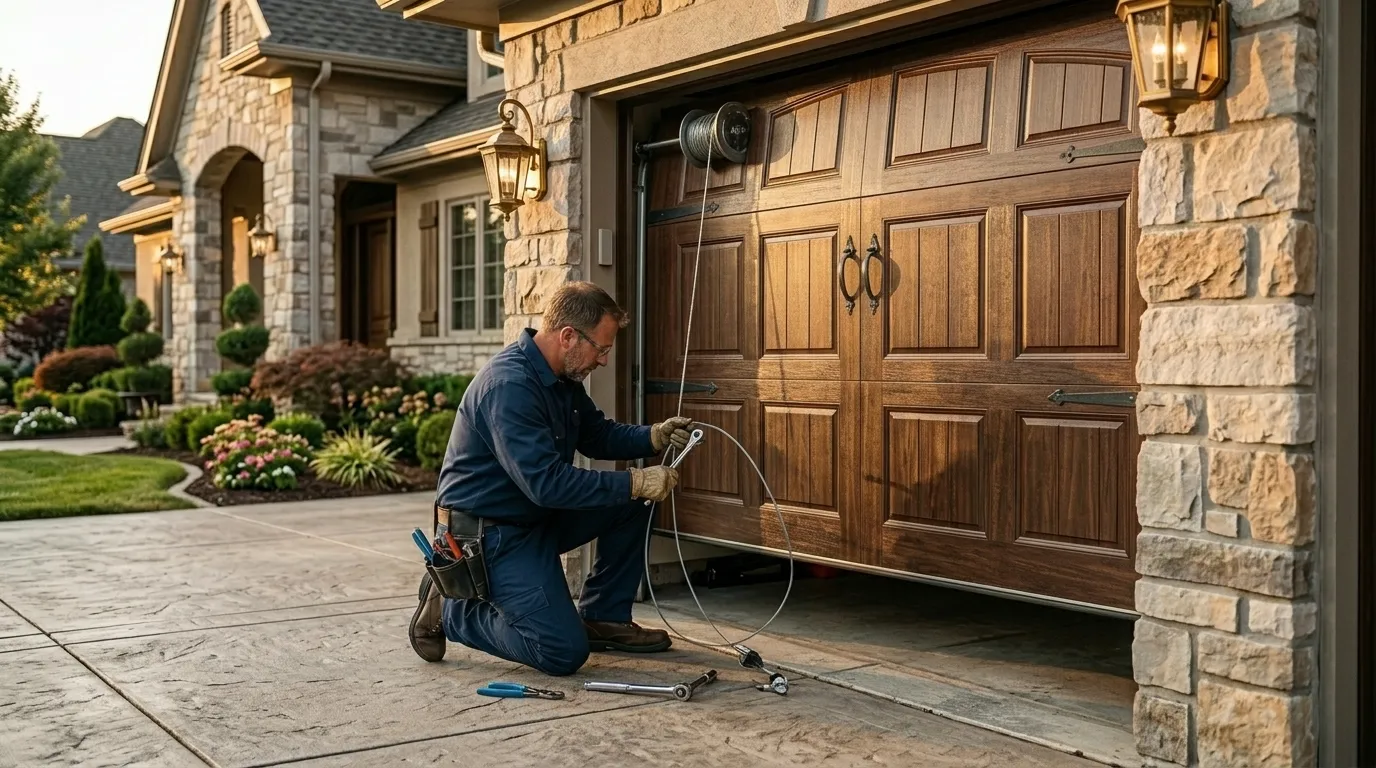
Middletown's housing runs from 1938 to 2005, with the median build year sitting at 1962, and most of the stock across the area's 76 named sections dates to the 1960s and 70s. That matters because torsion springs from that era were spec'd for a lighter door and a shorter service life than anyone expected the door to actually get. Thirty, forty, fifty years later, a lot of those springs are still hanging on the same shaft they shipped with.
Add the climate. Middletown sits in a cold-severe band, and that's not a marketing phrase - it means real overnight-to-afternoon temperature swings that flex steel every single day of winter. A spring that's already lost temper from age doesn't handle that flexing well. It snaps, usually on a cold morning when someone's trying to leave for work.
The track hardware from that same building era is lighter gauge than what ships on doors sold today, so when a roller starts to go, it doesn't just wear the wheel - it chews the track lip too. That's a different repair than a straight roller swap, and it's the kind of thing that shows up more here than in a neighborhood built in the last fifteen years.
A torsion spring under tension can put someone in the hospital, and that's true whether the door is five years old or fifty. If the spring is broken and the door won't lift, or lifts unevenly, don't wind, cut, or unwind anything yourself. That's the one job on a garage door we tell every homeowner to leave alone, no exceptions.
There's plenty you can safely check first. Look at the roller track for a bent section or a lip that's been chewed through - that's visible without touching the spring. Listen for a grinding or popping sound when the door moves, which usually means a roller or a hinge, not the spring itself. Check whether the door is noticeably heavier to lift by hand than it used to be; that's often the first sign a spring is losing tension before it fully breaks.
We won't tell you a lubricant spray fixes a worn track or a cracked panel, because it doesn't - it just quiets the symptom for a week. If what you're seeing is cosmetic wear on newer hardware, a call might not even be worth the trip charge. But once tension or lift is involved, that's a truck call, not a weekend project.
On a house built in the 1960s or 70s stretch that makes up most of Middletown, the most common call we get is a broken torsion spring on a single-piece or sectional door that's still running its original hardware. The tell is usually the same: the door won't budge, or it slams down instead of lowering evenly, because one side of the spring system let go and the other side is still fighting it.
The second most common thing is track wear - rollers riding a track lip that's been ground thin over decades of use in the cold-severe swings this area gets every winter. That shows up as a door that shudders, walks sideways in the track, or catches partway up.
On newer builds within the 1938-2005 range, the issue is more often an opener sensor or a worn drive gear than a spring problem, since the metal hasn't had as many freeze-thaw cycles to work against it. Either way, the fix depends on what's actually failing, not just on the door's age - which is why we look at the hardware before quoting anything.
Middletown Garage Door Pros runs calls across this service area, which covers roughly 380,475 households and 142,391 owner-occupied houses, at a median household income of $113,229 - a market where most owners we talk to choose to replace a failing spring system outright rather than keep patching the same worn hardware. If you're closer to Fairview, Port Monmouth, or Belford, that's about a three-mile run for us. Holmdel, Hazlet, Red Bank, and Lincroft run four to five miles out, and we go as far as Colts Neck and Tinton Falls on the far edge of the area.
When you call, tell us what the door is doing - won't lift, lifts crooked, makes a grinding sound, or just feels heavy - and roughly how old the door and opener are if you know it. That gets us to the right parts on the truck instead of a second trip. We don't quote a repair over the phone sight-unseen when tension or track damage is involved, because guessing wrong on a spring job wastes your time and ours.
Start from the homepage if you want to see the rest of what we handle before booking.
Middletown sits in a cold-severe climate band, and the daily swing between cold nights and warmer afternoons flexes torsion spring steel constantly through the winter months. A spring that's already aged from decades of use doesn't handle that repeated flex well, and it tends to let go on a cold morning rather than gradually.
Likely yes. Most of Middletown's housing dates to the 1960s and 70s, and track hardware from that era is lighter gauge than what's sold on doors today. Decades of roller wear on that lighter track often chews the track lip itself, not just the roller, which is a different repair than a simple roller swap.
We'd rather you didn't. A torsion spring under tension can cause serious injury regardless of the door's age, and this is the one repair on a garage door we don't recommend as a DIY job under any circumstance. Everything else - checking rollers, listening for noise - is fine to look at yourself first.
We run calls across the surrounding area, including towns three to five miles out like Fairview, Port Monmouth, Belford, Holmdel, and Hazlet, and further out toward Colts Neck and Tinton Falls. Call and tell us your location and we'll confirm whether it's on our route.
Call now or request a free quote - same-day service on most repairs, upfront written pricing.