Middletown, NJ · Garage Door Service
Deal homes mostly date to 1938, decades older than the service area median. We travel from Middletown to work on the doors and hardware that stock brings up here.
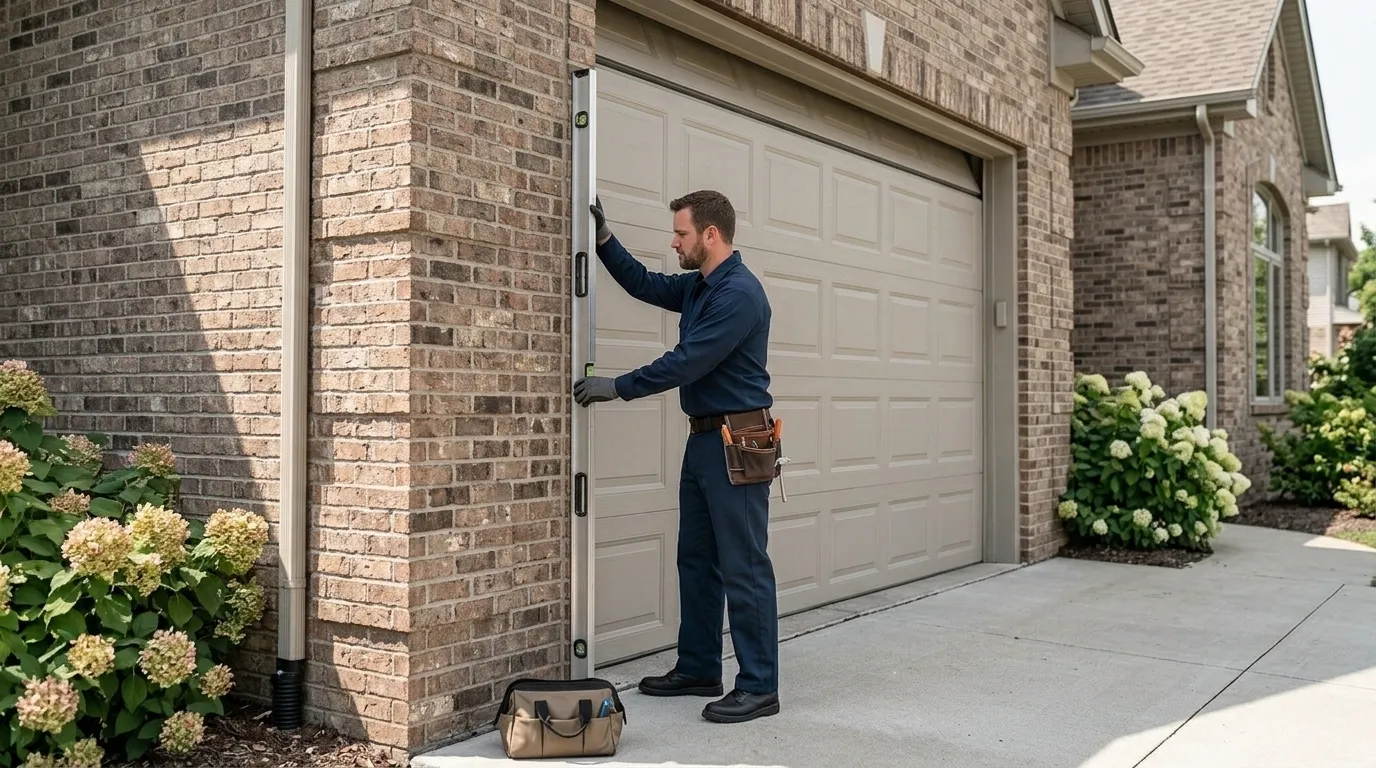
Deal's median home was built in 1938, which puts it well ahead of the 1962 median across the rest of the towns we cover. That gap of over two decades matters more than it sounds like it should. A door installed on a house from the late 1930s or 1940s was very likely replaced at least once already, sometimes twice, and each replacement brought a different track width, a different spring size, or an opener bracket that doesn't match what's actually on the wall now. We see original masonry openings that were never squared for a modern steel door, jambs that have settled over eight decades, and headroom that's a few inches shorter than what current openers expect. None of that is a problem on its own. It's a problem when someone shows up with a stock door and doesn't check the opening first. In a service area with only 247 households, houses like this aren't rare exceptions - they're a meaningful share of what we're called out to look at, so we plan for it before we quote the job.
On stock this old, torsion springs on side-mounted hardware fail more than the newer center-mounted setups you'd expect on a house built in the 1970s or later. We also see cables that have never been swapped stretch and fray at the drum, and tracks bent from decades of a car door catching the edge in a tight, older garage. Openers get added later on houses this age, which means the safety sensors are sometimes mounted as an afterthought rather than built into the original bracket - worth checking on any house from this era that hasn't had the opener serviced recently. With median household income here at $77,679, most calls we get are repair calls, not full replacements: a spring swap, a cable job, a track realignment. Full door replacement comes up when the door itself is original and the steel has fatigued past what a repair can fix, which does happen on stock this old, just not as the first move.
Deal is a small pocket - 247 households - sitting about 12 miles out from our base in Middletown, farther than closer stops like Fairview or Belford. The housing here skews notably older than the 1938-2005 range we see across the wider service area, with Deal's own median landing right at the early end of that range. Winters in this region fall in the cold-severe band, and older hardware feels that harder: metal contracts, grease stiffens, and a spring that was already near the end of its cycle count often lets go on the first hard cold stretch. Houses built this early also tend to have narrower single-car openings by today's standard, which limits which stock doors fit without custom trim.
We don't try to force a modern door into an opening that was framed for something narrower without doing the carpentry work first - that's a different trade, and papering over it with foam trim never holds. We also won't quote a repair sight unseen on a door this old without seeing the spring size and track condition in person, because guessing wrong on hardware from a house built in the 1930s or 40s wastes everyone's time and money. If a door's steel has rusted through at the bottom panel, we'll tell you replacement makes more sense than another patch repair, even if that's not what you called about. We travel out from Middletown for these jobs; we don't keep a stocked location in Deal itself, so very tight same-day windows aren't something we promise here.
If your house dates closer to the 1938 median for this area, it likely got its door and opener years apart, sometimes replaced more than once. That produces mismatched track widths, older side-mounted torsion springs, and openers bolted onto brackets that weren't original. It's common on stock this old and not a sign of bad work, just a house with more history in its garage than most.
No. We work out of Middletown, about 12 miles from Deal, and travel out for calls in this area. We don't promise a fixed same-day window the way a local depot might, but we do come out for the jobs described above.
Not always. Houses built in the 1930s and 40s sometimes have narrower openings than what standard stock doors are sized for today. We check the opening before quoting anything, and if it needs trim carpentry to fit a modern door, we'll say so rather than force a fit that won't hold up.
Call now or request a free quote - same-day service on most repairs, upfront written pricing.