Middletown, NJ · Garage Door Service
Serving Fairview, NJ from Middletown, 3 miles away. Homes here date mostly to 1957, meaning older torsion hardware and non-insulated panels are common repairs.
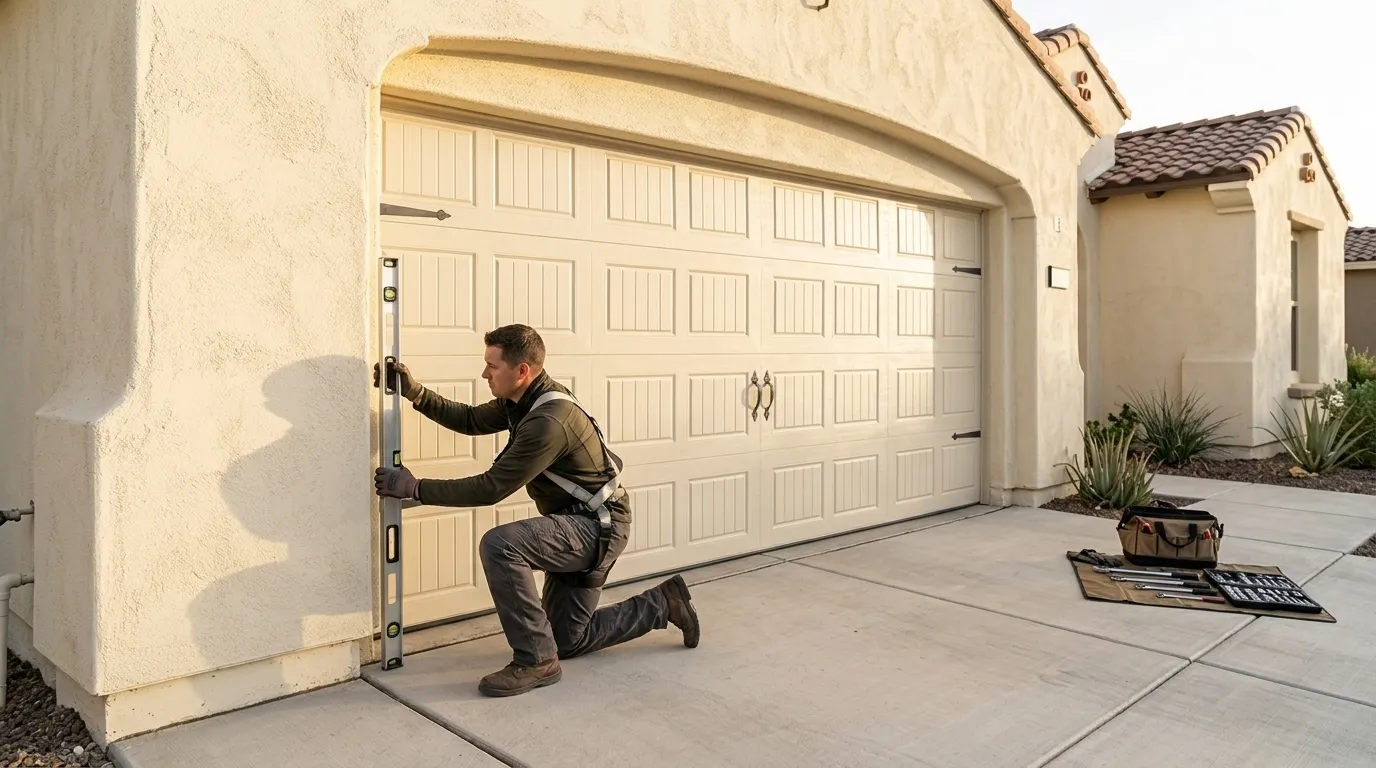
Fairview sits about 3 miles from our Middletown location, and it's an easy trip for us, but the reason we're writing this page at all is what's behind the doors there, not the drive. The median home in Fairview went up around 1957, which is earlier than the broader service area's 1962 median. That five-year gap matters more than it sounds like. A door installed on a 1957 build is more likely to still be running on its original jamb hardware, with brackets sized for a lighter, single-layer wood or early steel panel rather than the heavier insulated sections that became standard later.
We also work across a service area with 380,475 households total, and Fairview's roughly 1,440 households are a small, older slice of that. Fewer newer builds means fewer newer doors. When we get a call from this area, we go in expecting a door that's outlived at least one owner and possibly two openers, and hardware that was never meant to carry today's insulated retrofit panels without some rework at the header and track.
The cold-climate factor doesn't change by neighborhood, but it hits older, less-sealed doors harder. A 1957-era door with a worn bottom seal loses more heat and lets in more road salt spray than a door built to a newer standard.
The calls we get out of Fairview lean toward hardware that's original or close to it. Torsion springs sized for lighter single-layer panels wear out on a predictable cycle, and when a homeowner has since swapped in a heavier insulated door without upsizing the spring, we see premature spring failure and openers straining to lift a door they weren't matched to.
Track alignment is another recurring one. Older jamb construction settles differently than newer framing, and a door that's been rehung once or twice over the decades often has a track that's slightly out of plumb. That shows up as a door that binds partway through its travel or a roller that jumps the track under cold-stiffened cable.
We also replace a fair number of bottom seals and weatherstrip runs in this area. On a house from the late 1950s, the original threshold gap was cut for a thinner door slab. Retrofits sometimes leave a gap that lets in wind-driven rain and salted runoff during winter storms, and it's a cheap fix that gets skipped because nobody notices until the door's already rotting at the bottom rail.
Fairview's housing stock centers on 1957, roughly five years ahead of the wider area's 1962 median. That's a meaningful difference for garage doors specifically because the mid-to-late 1950s was still largely a single-layer, non-insulated door era in this part of New Jersey, before the double-layer and triple-layer sandwich construction became common.
At roughly 1,440 households, Fairview isn't a large pocket, and the homes we see tend to share a build era rather than a build style, since most went up in the same postwar wave. Median household income in Fairview runs around $170,395, well above the wider service area's $113,229 median, and that shows up in the calls too: more requests for full door and opener replacement rather than patch repairs, and less hesitation about upgrading to insulated steel panels once a spring or opener needs replacing anyway.
We don't have footprint or square-footage data for this area, so we won't guess at typical door widths or bay counts here. What we can say is that the age of the housing, not its size, is what drives the hardware mismatches we run into on most calls.
We don't do cosmetic-only panel touch-ups on doors that are structurally near the end of their life. If a 1957-era door has a cracked stile, a warped bottom section, and a spring rated for a lighter slab, replacing one part and leaving the rest is a short-term patch that costs the homeowner twice. We'll tell you when replacement is the honest call instead of stacking repairs on hardware that's outlived its design life.
We also won't quote a same-day fix sight unseen. Parts for older jamb-mounted torsion setups aren't always sitting on the truck, and a door built to fit a 1957 opening can need a part ordered rather than pulled off a shelf. We'd rather say that up front than promise a timeline we can't hit.
Last, we're traveling from Middletown for every Fairview call, not stationed there. That's a short trip at 3 miles, but it means we schedule rather than drop by, and we're not the right call for a walk-up same-hour emergency without any lead time.
Doors and openers installed on homes from that era were sized for lighter, single-layer panels. If the door's since been swapped for a heavier insulated one without updating the spring and hardware, the opener works harder than it should and the spring wears out faster. It's the single biggest thing we check first on Fairview calls.
No. We run out of Middletown, about 3 miles away, and travel to Fairview for scheduled jobs. We don't claim a local depot or a guaranteed response window here, just a short, workable drive.
Often yes, especially given how cold this area gets in winter, but the spring and opener usually need to be resized for the added weight. Swapping panels without checking the spring rating is one of the most common mismatches we find on older Fairview homes.
Homes built in the late 1950s have had decades to settle, and jambs framed for a thinner original door slab don't always line up cleanly with later hardware. A door that binds partway through its travel is often a symptom of that older framing, not a new problem.
Call now or request a free quote - same-day service on most repairs, upfront written pricing.