Middletown, NJ · Garage Door Service
Garage door repair for Farmingdale, NJ, where most houses date to 1972. Middletown Garage Door Pros travels 14 miles to fix doors built for that era's hardware.
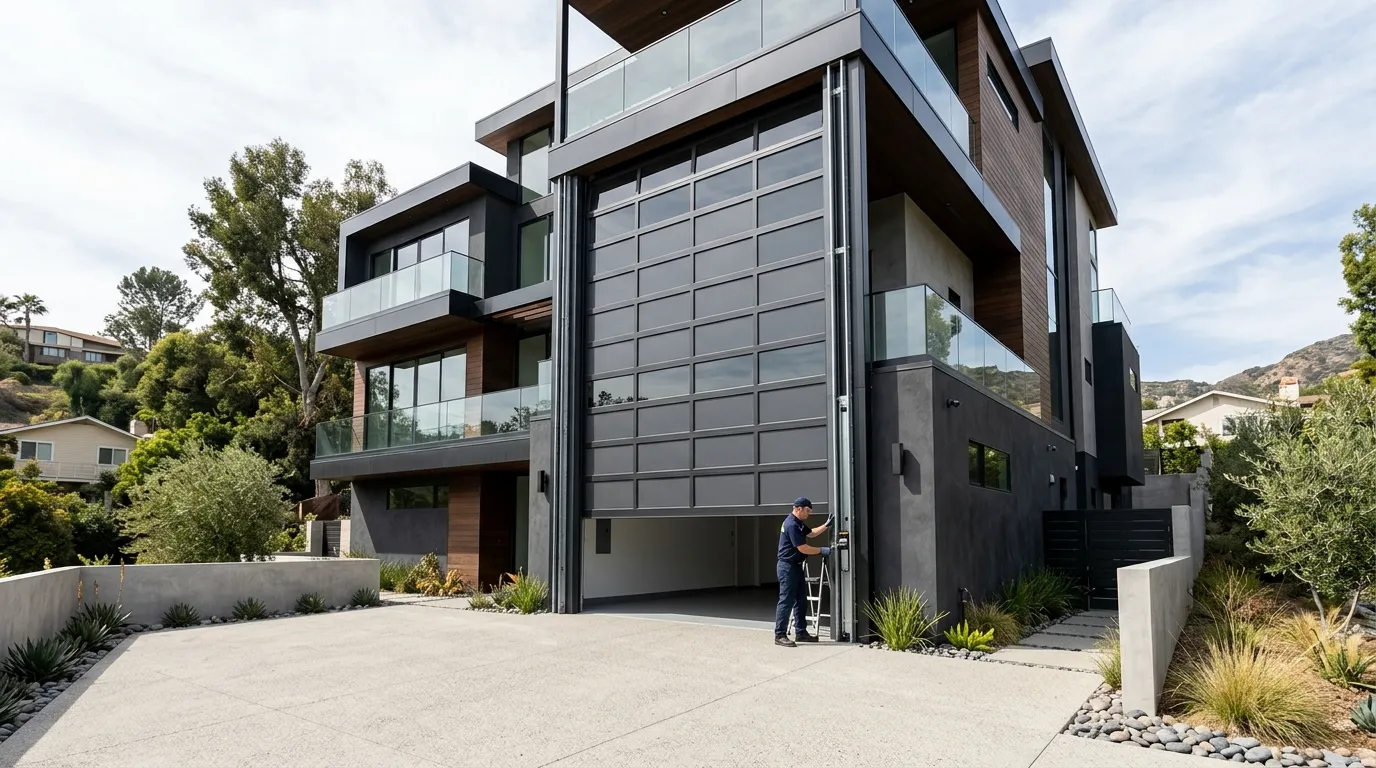
Farmingdale's houses mostly went up around 1972, a full decade after the median build year in Middletown itself, which sits closer to 1962. That gap matters more than it sounds. A door and opener installed in the early 1970s came with different hardware defaults than the ones going into homes ten years earlier - extension springs mounted along the horizontal track rather than torsion springs over the header, lighter steel panels, and openers with chain drives bolted to framing that wasn't always sized for the load.
When we get a call from this part of the coverage area, we're usually looking at that early-70s setup: a door that's original or close to it, hardware that's been replaced piecemeal over fifty years, and an opener that's probably its second or third unit since the door itself never got swapped. The fix that works on a 1962 house with torsion springs over the door doesn't always transfer directly. We check the mount style first, not just the symptom.
That's the honest starting point for this area - not a generic "garage door issues" pitch, but a recognition that the hardware here skews to a specific decade, and the failures follow from that.
Given the housing age here, the calls we get from Farmingdale skew toward a few specific problems. Extension springs stretched along the track wear out differently than torsion springs do - they tend to sag and lose tension gradually rather than snap all at once, so owners often notice the door getting harder to lift for weeks before it fails outright. We also see a fair number of chain-drive openers from that era's replacement cycle grinding or slipping, since the original hardware they were bolted onto wasn't always upgraded alongside them.
Cold-weather stress adds to it. This whole region sits in a severe cold climate band, and steel panels from the early 1970s rarely came with the insulation values you'd find in anything installed in the last fifteen years. Cold makes lubricant in old rollers and hinges stiffen up, which puts more strain on a spring system that's already older than the house's second owner.
Rust at the bottom panel and track corrosion from decades of winter salt and moisture show up more here than in newer builds. None of this is exotic work, but it's a specific set of failures tied to what's actually installed in these houses, not a boilerplate list of garage door problems.
Farmingdale is a small piece of the wider coverage territory - about 582 households, which is a fraction of the roughly 142,391 owner-occupied houses spread across the full service area. Median household income here runs $97,574, noticeably below the $113,229 median for the broader area we cover. That gap tends to show up in how repairs get approached: more owners here ask us to fix what's failing rather than replace the whole door outright, and a lot of the time that's the right call given hardware from the early 1970s can often be serviced rather than torn out.
The housing stock leans toward that 1972 median build year, single-family construction from a period when steel doors and chain-drive openers were standard rather than premium. That's different from the older prewar-adjacent stock closer to Middletown's own 1962 median, and it's different again from anything built in the last two decades with insulated doors and belt-drive openers as the default.
We don't have current permit or renovation data specific to Farmingdale, so we're not going to guess at how much of this stock has already been upgraded. What we can say is that when a door here fails, the hardware behind it usually points back to that early-70s era.
We travel from Middletown to reach Farmingdale, about 14 miles each way, and we're straightforward about what that means: this isn't a same-day guarantee, and we don't keep a depot or standing crew in the area. If a spring snaps at 6am and you need someone on-site in twenty minutes, we're not going to promise that from this distance and we'd rather say so than overpromise and show up late.
We also won't push full door replacement on a job where the fix is straightforward. A lot of the extension-spring and chain-drive setups common in this area's housing can be serviced with standard parts rather than swapped out wholesale, and we're not going to sell a homeowner a new door because the old one is fifty years old if the hardware itself is sound. Replacement makes sense when the panels are rusted through or the track is bent beyond adjustment, not just because a house predates newer opener technology.
What we can't do is quote a firm arrival window for this area the way we might for calls closer to Middletown. The drive is real and it's part of any honest estimate we give.
Houses in Farmingdale mostly date to around 1972, about a decade later than the median build year closer to Middletown. Openers and spring setups installed during that period often used extension springs and chain drives as the standard, which behave and fail differently than the torsion setups common in older housing stock.
No. We run out of Middletown, about 14 miles away, and travel to Farmingdale for calls. We don't keep a depot or standing crew in the area, so we're upfront that arrival times reflect that distance rather than a local presence.
Depends on what's actually wrong. If the hardware is original from the early 1970s but the panels and track are sound, repair is usually the better value. Replacement makes more sense once panels are rusted through or the track is bent beyond straightening, not simply because the door is decades old.
Call now or request a free quote - same-day service on most repairs, upfront written pricing.